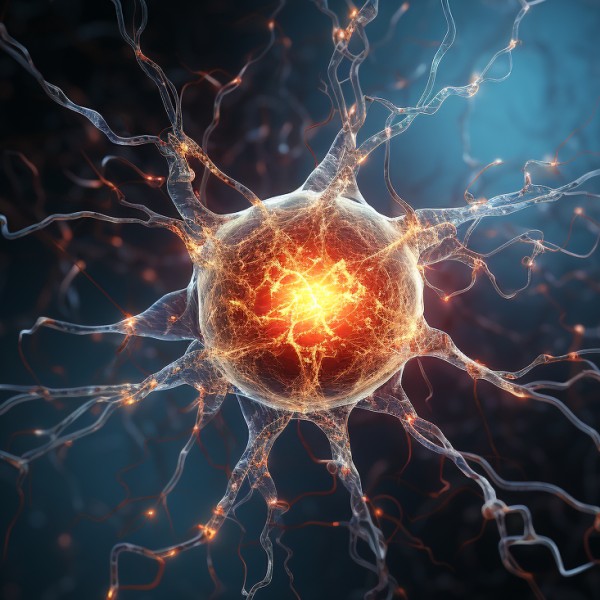
Imagine losing control over one side of your body—not just strength, but the ability to make it obey. Movements become stiff, awkward, or strangely foreign, as if the limb no longer belongs to you. For people with corticobasal degeneration, this loss of motor control is often the first sign of a deeper neurodegenerative process affecting both movement and cognition.
Corticobasal degeneration (CBD) is a rare, progressive neurodegenerative disorder characterized by asymmetric motor dysfunction and higher cortical impairment. It affects regions of the brain responsible for movement planning, execution, and sensory integration—particularly the cerebral cortex and basal ganglia.
CBD is classified as a tauopathy, meaning it involves abnormal accumulation of the tau protein within brain cells, leading to neuronal dysfunction and cell death.
What Causes Corticobasal Degeneration?
The exact cause of CBD is unknown. Most cases are sporadic, with no clear genetic inheritance.
At the cellular level, CBD is marked by:
- Abnormal aggregation of hyperphosphorylated tau protein
- Degeneration of neurons and glial cells
- Disruption of cortical–basal ganglia circuits
These changes interfere with communication between brain regions responsible for voluntary movement, posture, sensation, and executive function.
Unlike Parkinson’s disease, CBD does not primarily involve dopamine deficiency, which is why standard Parkinson’s medications are often ineffective.
How CBD Affects the Nervous System
CBD affects both motor pathways and higher cortical functions, producing a distinctive combination of symptoms.
Neurological involvement includes:
- Degeneration of motor cortex (movement planning and execution)
- Basal ganglia dysfunction (movement regulation)
- Parietal cortex involvement (sensory integration and spatial awareness)
The disease typically begins on one side of the body and remains asymmetric throughout its course.
Early Signs and Symptoms
Initial symptoms are often subtle and may be mistaken for other movement disorders.
Common early features include:
- Stiffness or rigidity in one arm or leg
- Clumsiness or loss of fine motor control
- Slowness of movement
- Tremor (less common than in Parkinson’s disease)
- Difficulty performing learned movements despite normal strength (apraxia)
Patients may notice that one limb does not respond as expected, even though it is not weak.
Cortical Features: Beyond Movement
As CBD progresses, symptoms reflect involvement of higher brain functions.
These may include:
- Apraxia: inability to perform purposeful movements on command
- Alien limb phenomenon: a limb seems to move involuntarily or feels “foreign”
- Sensory neglect: reduced awareness of one side of the body
- Language difficulties, including nonfluent speech
- Executive dysfunction, affecting planning and problem-solving
Cognitive impairment in CBD differs from Alzheimer’s disease and often centers on motor planning, spatial awareness, and language rather than memory alone.
Is There Neuropathy in CBD?
Corticobasal degeneration is a central nervous system disorder, not a peripheral neuropathy. However, patients may experience abnormal sensations, pain, or stiffness related to central processing dysfunction rather than damage to peripheral nerves.
Muscle rigidity and abnormal posturing can contribute to discomfort and secondary musculoskeletal pain.
How Corticobasal Degeneration Is Diagnosed
CBD is challenging to diagnose definitively during life.
Diagnosis is based on:
- Detailed neurological examination
- Clinical pattern of asymmetric motor and cortical features
- Brain MRI showing cortical and basal ganglia atrophy (often asymmetric)
- Exclusion of other conditions such as Parkinson’s disease, progressive supranuclear palsy, or stroke
Definitive diagnosis can only be made through neuropathological examination after death, which is why the term corticobasal syndrome (CBS) is often used clinically to describe the presentation.
Treatment and Management
There is currently no cure for corticobasal degeneration, and no treatment has been shown to slow disease progression.
Management focuses on symptom relief and supportive care:
- Physical and occupational therapy to maintain mobility and function
- Speech therapy for communication and swallowing difficulties
- Muscle relaxants or botulinum toxin for severe rigidity or dystonia
- Medications for mood or behavioral symptoms when needed
Levodopa and other Parkinson’s medications generally provide limited or no benefit.
Disease Course and Prognosis
CBD is a progressive disorder. Symptoms typically worsen over several years, with increasing disability.
Common later-stage complications include:
- Severe motor impairment
- Loss of independent ambulation
- Swallowing difficulties
- Increased risk of falls and aspiration
Average survival is often measured in years rather than decades, though progression rates vary.
Why Corticobasal Degeneration Matters
Corticobasal degeneration highlights how movement disorders are not always confined to muscles or simple motor pathways. CBD affects the brain’s ability to plan, initiate, and recognize movement, blurring the line between motor and cognitive disease.
For patients and families, early recognition can help set realistic expectations, guide supportive therapies, and avoid ineffective treatments. For clinicians, CBD serves as a reminder that asymmetric, treatment-resistant parkinsonism with cortical features points to a distinct neurodegenerative process—one that requires a different diagnostic and care approach.
Corticobasal degeneration may be rare, but its impact on function, identity, and independence is profound.
Further Reading
- Corticobasal degeneration and corticobasal syndrome: A review.
- Corticobasal degeneration: An update.
- Pharmacological interventions in corticobasal degeneration: a review.
- Criteria for the diagnosis of corticobasal degeneration.
- Corticobasal degeneration: a review.
- Corticobasal degeneration: a review.